Search This Blog

Tuesday, August 14, 2018

What if you fly?

I found this inspirational little poem today.


Many others have made posters, t-shirts, Etsy-type stuff out of it, so I can't claim any uniqueness to this creation. However, I felt it was a very appropriate message for my family this month.

One son is getting ready to leave on a mission. Another son is leaving for college at the end of the week. I am starting a new job, my first position as a teacher. My daughter is starting in a new school. So we all feel like the baby bird, balanced precariously on the branch and wondering if we dare take the leap.

So, for my beautiful children, I say... what if you do? Go out, dream big, take a risk.

And what if you fly?

I will be there beside you.


Monday, January 1, 2018

Extreme Book Nerd Reading Challenge 2017


I did not quite finish the reading challenge from the Idaho Falls Public Library this year. They offer 50 categories, with a challenge to read a book in each category this year. I read 50 books, but not quite in 50 weeks (it took me one more week to complete my 50th), and in some categories I did not finish the book (marked with an asterisk).
I wanted to put together a list of the books I read, as well as some brief comments on some of my favorites. I’ll start with the books that I read more than any other genre (Regency romance and historical romance, of course) then move on to the categories that were more challenging for me to complete. The category is in parentheses afterwards.

Regencies:
1.      Lord John’s Dilemma, by G.G. Vandergriff (A book you’ve been meaning to read)
2.      Miss Whitaker Opens her Heart, by Jennifer Moore (A book with a verb in the title)
3.      A Place for Miss Snow, by Jennifer Moore (A book by an author whose name ends with a vowel) Jennifer Moore’s books are always a treat, bringing me the Regency stories but not always in the typical London/England setting.
4.      Miss Armistead Makes her Choice, by Heidi Ashworth (A book with the military in it)
5.      An Inconvenient Romance, by Charlise Linton (A book written in the first person)
6-8. Whispers on the Moore collection by Sarah E. Ladd
·         The Heiress of Winterwood     (A book you love — read it again)
·         The Headmistress of Rosemere (A book that makes you happy)
·         A Lady at Willowgrove Hall (A book with an illness in it)
9.      One Love, Two Heart, Three Stories, by J. Dawn King (A book chosen because of the title) Three Pride and Prejudice variations
10.  The Abominable Mr. Darcy, by J. Dawn King (no category, I missed recording this one!) Another Pride and Prejudice variation
11.  Romancing Daphne, Sarah Eden (A book recommended by someone you just met). Thank you, kind librarian, for recommending this book so I could fit it in this category!
12.  A Fine Gentleman, Sarah Eden (A book by an author with your name)
13.  For Love and Honor, Sarah Eden (no category—finished this after Christmas so it didn’t count, but it’s sooo good!)
14.  Mrs. McVinnie’s London Season, Carla Kelly (A book with an ugly cover)
15.  A Season in London, by Heather B Moore, Elizabeth Johns, and Rebecca Connolly. (A book that feeds your wanderlust) I would love to visit England just to see all the Jane Austen sites and the museums that feature Regency time period.
16.  An Arrangement of Sorts, Rebecca Connolly (A book you can finish in a day) I read this one because of her short novella in the previous one. She does a good job with Regencies.
17.  The Darkest Summer, Rebecca Greenwood (A book with music in it, very little music, but I had to put it somewhere!) So this was a new release I was excited to read, but the poor editing drove me nuts! It wasn’t self-published, either. The author has incorrectly used commas in almost EVERY sentence. It was supposed to be a retelling of the story of Persephone. Other than that, the plot is driven by “how many things can go wrong on a two-day carriage ride.” A good attempt by a first-time author.
18.  The Fall of Lord Drayson, by Rachael Anderson (A book you own but have never read). So I got dozens of books this year free, or for .99, via Bookbub. I have many more books I haven’t yet read. This just happened to fit this category.
19.  Fairchild, by Jaima Fixsen, (a book set in Europe)
20.  The Silent Governess, by Julie Klassen (no category) Julie Klassen is one of my favorite authors. She writes Christian historical/Regency romance. I’ve read about six of her books, most by checking them out from the library through the Overdrive reading app. They are long, deep, and well-researched books. I always learn something from the epigraphs at each chapter heading, too.
Historical Fiction:
21.  The Lady of the Lakes, by Josi Kilpack (A book published this year)
22.  The Uninvited, by Cat Winters. (A ghost story) This story has a twist to it! I didn’t even guess…
23.  My Lady Jane, by Cynthia Hand, Jodi Meadows, Brodi Ashton (A book with magic in it). I’ve read Cynthia Hand’s angel YA books a few years ago. I have Brodi Ashton’s Everneath (still need to finish it). And this book was a favorite recommended by my friends, the Sher family. So it came highly recommended and I just need to make time to finish it. I loved it! The humor is great and the magical twist on English history is wonderful.
24.  Dead, Mr. Mozart, by Bernard Bastable (a cozy mystery). This story tells of an alternate history for Mozart, who is a struggling composer in England, tasked with solving a murder before his new opera celebrating the coronation of Prinny can debut. It’s set just after the Regency period so I liked the familiar setting and the mystery is pretty tame but intriguing.
25.  The World Within: A Novel of Emily Bronte, by Jane Eagland (A book with a natural disaster in it). I enjoyed this YA fictionalized account of Emily Bronte’s childhood. The story was true to most of the details of her upbringing, and I understand better how odd those Bronte sisters were. (There is a minor natural disaster in the story—an earthquake/landslide, but Reverend Bronte thought it foretold the end of the world.)
26.  Shores of Bountiful by Loralee Evans (A book with death in it). I don’t typically read Book of Mormon fiction, but this story was very compelling and the author does a great job conveying emotion in her story.
Book Club reads:
27.  Hotel on the Corner of Bitter and Sweet, by Jamie Ford (An author’s debut novel). I’ve read this book before, several years ago, but enjoyed it so much I was excited to read it again with our book club.
28.  The Rosie Effect, by Graeme Simsion (A humorous or satirical book). The first chapter of this book was the funniest. Coming from someone who has an austistic/Aspie child, I found his “lecture” to the Asperger’s group hilarious. The rest of the book was basically how a guy who runs his life via routine can adapt when love compels him too (though the swearing and loose morals were not pleasant to read).
29.  The Optimist’s Daughter, by Eudora Welty (A book with an unreliable narrator). Good writing, interesting people, but certainly an odd narrator.
30.  The Boys in the Boat, by Daniel James Brown (YA edition) (A book set in New England). Okay, so most of the book is in Washington, but the races to qualify for the Olympics are in New England. I was running out of categories… I thoroughly enjoyed the book, and even though it was the shorter YA version I learned a lot and have great respect for the athletes who row competitively.
31.  A Man Called Ove, by Fredrik Backman (A book translated from another language). This is one of the rare books in which I laugh and cry in the SAME paragraph! My heart just really went out to this grumpy man who finally let others into his life.
32.  Maisie Dobbs, by Jacqueline Winspear (A book by a British author). Loved this book and plan to read more in the series.
33.  The Natural Laws of Good Luck, by Ellen Graf (a book of essays). Well, they are sort of essays… close enough. A memoir of a Chinese/American marriage and interesting look at class of cultures.
34.  An Unfinished Life, Mark Spragg (A book you would never read). So without the book club selecting this from the few available at the library at the time, I would not have read it. Language, violence, yucky stuff. Yet a look at how a plucky girl manages in a world where the adults are loving but dysfunctional.
35.  *Founding Mothers, by Cokie Roberts (A history book). I didn’t finish this book because time ran out and I didn’t make it to the book club discussion, and the book had to go back to the library. So I can’t technically count it, but the half I read was informational and readable for nonfiction.
36.  *The Girls of Atomic City by Denise Kiernan. Another book I only half read so I couldn’t count it.
37.  The Kite Runner, by Khaled Hosseini (A book about a culture you’re unfamiliar with). I would have to rank this as the best book I read last year. The story of the clash of cultures, both within Afghanistan and in the U.S., was eye opening. And “For you, a thousand times.” Ah, good tears.
Serious books:
38.  Learning Theories (Schunk, 2016). (A book with a government agency in it). Yeah, it was my textbook, and I’ve cited in in APA style…
39.  Wolf Willow, by Wallace Stegner (published before I was born). Such a great writer. Glad I could take part in the IHC Summer Institute and study Stegner’s writings.
40.  Angle of Repose, by Wallace Stegner (A book that intimidates you). I’ve read it before, so it was not necessarily the book that was intimidating but the fact that I had to meet with 30 other teachers and discuss our thoughts with professors. Stegner’s writings were some of the most impactful for me last year.
41.  *The Making of Jane Austen (a book from a library display). I didn’t finish it. It’s on my “try again later” list.
42.  The Smartest Kids in the World (and how they got that way) by Amanda Ripley (A nonfiction book). Read it for Learning Theories 6602. Great analysis of how our educational system lacks rigor.
43.  Beyond Blue (a color in the title). Great view of how depression feels and helped me understand my husband and children.
44.  The Book of Mormon. Finished it Dec. 30! (I put this in the “book made into a movie” category, though it was too late to count it.)
45.  Tuesdays with Morrie, by Mitch Albom (book with a day in the title). Another book I’d put at the top of my list for impactful thoughts, moving writing, and lessons that stay with the reader long afterward.
46.  *The Sea, The Sea, by Iris Murdoch (Man Booker award winner). The prose is beautiful but the book was so slow moving, I never finished it.
Young Adult novels:
47.  Steelheart, Brandon Sanderson (a famous author’s lesser known work). Great YA adventure, and I’ll be reading more Brandon Sanderson. His writing measures up to the renown.
48.  Two Roads, Chris Crowe (an addicted character).
49.  Heartstone, by Elle Katherine White (bottom shelf of the library). A Pride and Prejudice variation with dragons? Yes, yes! I would not have discovered it had I not been scouring bottom shelves of the library.
50.  Book of a Thousand Days, by Shannon Hale (a YA book).
51.  The Bear and the Nightingale, by Katherine Arden. Started this one in October but didn’t finish until after Christmas. A Russian fable retelling; will be reading the next book once it comes out.
“Fluff” books:
52.  Second Chance Ranch, by Liz Isaacson (author never read before)
53.  How to get over your Ex in 90 days, by Jennifer Peel (relation in the title)
54.  Pride and Politics, by Brittany Larsen (book with a US president)
55.  Finding Love in Sun Valley, by Angela Ruth Strong (book with a wedding in it).

So that’s 51 books completely finished, though not by the Dec. 21 deadline, and several more given a good attempt. Now I’m moving on to my giant TBR pile and going forward with 2018’s challenge.


Thursday, July 20, 2017

Wallace Stegner and the Consciousness of Place Institute

The Idaho Humanities Council's Summer Institute of 2017

Reflections on Wolf Willow

In Wolf Willow, Wallace Stegner describes the return to his home on the Saskatchewan prairie. Walking into the town he calls Whitemud, he says his visit is to "test memory against adult observation" (6) and revisit the place that imprinted character upon him as a child. "And so it is with mixed feelings of intimacy and strangeness" (12) that Stegner approaches his old swimming hole in the Frenchman river, sniffing out reminiscences and searching for the quintessential force that cemented his memory. "It is the smells that seem to have stayed with me ... the tantalizing and ambiguous and wholly native smell ... called wolf willow" (16-18). Identifying the smell that brings him home, "the present and all the years between are shed like a boy's clothes dumped on the bath-house bench" (19). He remembers; he feels old sensations; he has "recovered" himself. He concludes, "If I am native to anything, I am native to this" (20).

In reading Wolf Willow, I came across passages that "recovered" myself, that reclaimed my childhood and reinforced my native heritage. This connection, forged through words and melded by common memory, has changed me this week. I became conscious not only of who I am, but where I am in the world.

My first instance of connection occurred in chapter two, as Stegner describes how a few bars of a Sunday school hymn can instantly turn him into a child on the old homestead, hearing the birds, seeing the buttercups, feeling the wind. I, too, was transported in reading this description. I was a nine-year-old girl, crossing the field between my house and my grandmother's, following the worn path of silk-dirt through the alfalfa. My uninhibited voice sang "There is Sunshine In My Soul Today," lines memorized from church, and as I walked I celebrated the day that was new and clean and the work contained therein. I could see Mount Timpanogas, the jagged skyward edge so dear and familiar. I could see the sheds, the old truck, the tree that grew at the halfway point down the lane.

This is what the view looked like:
Painting of Elm Crest Farm by Sarah Droegemueller, oil pastels on canvas


This painting was created over two years ago, but it is the image that leaps to mind when I think of our farm. It hangs above my writing desk at home, on my "wall of inspiration." Almost everything else on the wall is some piece of Jane Austen memorabilia (because I have been writing Regency-era fiction the past three years), but this piece, this piece of home, touches me more deeply than any imagined romantic notion from my novels. Perhaps I should clue in to this emotion and write of subjects closer to home as well. 

In any case, the passages from Wolf Willow recalled my home and infused me with a longing for places dear and familiar. One of these places is the "trail," the path that leads from my home to Grandma's and then to the barn. The trail is hard-packed dirt in spring, softest powdery dust in the summer, burning with heat, and pounded-slick ice in the winter. It is a connection, lines drawn to signify familial and territorial joinings. 

Stegner writes of the path at his homestead, "the trail was a thing we had exclusively created and ... it led to a place we had exclusively built." He calls it a "worn border to our inheritance," and "an intimate act, an act like love," (272-73) to mark the earth with his identity. I felt the same way of "my" path, my trail through the alfalfa field. 

Stegner left that family homestead after five years of drought, failed crops, withered dreams. He questions why his mother brought them there in the first place, and replies with "she and hers had been victimized by the folklore of hope" (281). Why did anyone attempt it? Stegner writes, "the pioneers unquestionably passed on to their children, including me, some of their faith in the future." Then he denotes, "hope, it turns out, is heritable" (255).

Hope. In my painting, the unseen ingredient shimmering with nostalgia and history is hope. My great-great-grandfather, Martin Albert Clinger, wrote in his autobiography that the most important things in life, the things that gave him the most hope, were faith, family, and the farm. 

The triumvirate:

  • Faith: Faith in Jesus Christ and his gospel. Faith in the future. Faith in the land. 
  • Family: My father's work ethic. My mother's nurturing. My five sisters and two brothers and their support through mutual suffering and joy. Learning through work and fun together.
  • Farm: A connection with wildness, nature, wilderness. Knowing the value of water, whether rain or a ditch or a canal. Watching a seed that sprouts and grows to bear fruit. 
This is just a glimpse of the connections I made in reading and learning of Wolf Willow. I had more ideas come, helping me understand my complex relationship with the land, after reading "The Wilderness Letter," and Cronon's "The Trouble with Wilderness; or, Getting Back to the Wrong Nature."

At the core, however, my "geography of hope" is bounded by the Wasatch Range on the east and Utah Lake on the west. 

I know who I am, because I know where I'm from.


Tuesday, May 31, 2016

The Objective Correlative in Sense and Sensibility

At the LDStorymaker's conference I attended earlier this month, I learned about the objective correlative. This term was coined by T.S. Eliot who "used this phrase to describe 'a set of objects, a situation, a chain of events which shall be the formula of that particular emotion' that the poet feels and hopes to evoke in the reader (“Hamlet,” 1919)" (Poetryfoundation.org). 

But what is an objective correlative? It is, in simple terms, the idea of conveying an emotion by attaching it to an object. Julie Daines was the workshop presenter who shared some great insights into this topic in her workshop "How to Show: Say Goodbye to Clenched Fists and Pounding Hearts" on Saturday afternoon. She revealed some great objective correlatives that past authors have used, such as Tolkien's ring in Lord of the Rings, or the books in The Book Thief. As I studied this idea, I realized I had seen a succinct example of an objective correlative, but had never known what to call it, in the Sense and Sensibility movie by Ang Lee, screenplay by Emma Thompson. 

For those poor non-Jane Austen addicts who are not intimately familiar with the book or movie, I will summarize: Sisters Elinor and Marianne are thrown into poverty at the death of their father. They each have a love interest. Elinor is becoming attached to Edward, the brother of her sister-in-law, and Marianne has attracted the attention of two suitors, first Colonel Brandon, an older but steady sort, then Willoughby, a handsome rogue. There is a long portion of the movie where the female leads are separated from their love interests and must work toward being reunited.

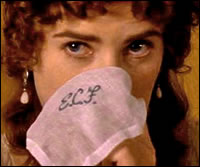
During these times of separation, the viewer is reminded of the missing hero by physical items--the objective correlative. The first object is the white handkerchief with E.C.F. embroidered on it. In a moment of grief, Edward offered Elinor this handkerchief to dry her tears. Elinor comes to treasure it after she's forced to part from Edward, and in another scene is sitting near a window, running her fingers over the initials. There's no need to outwardly state "Elinor is feeling sad here and missing Edward, longing for his affection." No, the audience views Elinor’s lingering attachment to his memory in the subtle reappearance of the handkerchief. Even when the memento he promised to personally deliver, the atlas, is sent by mail to younger sister Miss Margaret instead of in person, Elinor longs for his return and pines in his absence. There may be no formal promise or attachment, but the connection is vividly portrayed through the treasure of the handkerchief.


How utterly alarming, then, when Lucy Steele presses her confidential information of a secret five-year engagement with Edward Ferrars. Elinor understandably mutters, “We can’t mean the same Mr. Ferrars,” but then Lucy pulls out of her reticule an identical handkerchief embroidered with E.C.F. 
The reappearance of the objective correlative, now in a situation of betrayal, shows how Elinor feels, rather than tells. Elinor then spends several weeks in Lucy’s company with “the very person whose prior claims ruined all my hopes… knowing myself to be divided from Edward forever.” Austenesque writer Regina Jeffers describes it as "a metonymic device to establish Elinor’s emotional turmoil" (https://reginajeffers.wordpress.com/2012/06/21/sense-and-sensibility-1995-part-2-of-movie-discussion-rewriting-jane-austens-heroes/). First as a reminder of care and concern, then as a reminder of futile love, Elinor's handkerchief lends emotional pull to these scenes. 

Marianne’s final relationship is foreshadowed by the objects given and taken from her. While Brandon is getting to know his new neighbors, he attentively hands Marianne a lawn bowling ball. When cutting reeds, he hands her a knife. After her fall, he brings her “hothouse” flowers. Willoughby also brings flowers and gives her his pocket Shakespeare. He takes a cutting of her hair as a memento. This scene is filmed from the perspective of someone looking in from another room, not hearing any dialogue, but seeing the affection of the couple and watching the clipped section of hair being pressed to his lips and wrapped up to keep for later. 

Not long afterward, he departs with no explanation and Marianne is sobbing. Marianne writes him letters which are never returned or replied to. In the end, Marianne runs into him in London but the reunion is only embarrassing for them both. Willoughby finally replies to her letters by returning all the mementos, including the little lock of hair. The viewer only needs to see the hair folded into the letter to know that heartbreak and betrayal are contained therein. Brandon, however, has not rescinded his affections and has left all his mementos with Marianne. Upon return to Barton Cottage, he additionally gives a book, a much-desired pianoforte, and some music. It is with no surprise that her true, permanent feelings attach to Colonel Brandon and his kindness. 

Can an object convey emotion? Yes, if the appearance of the object is set off in a way that the reader/viewer clearly understands the emotion of the scene. When that object returns or is re-presented, the audience feels the return of that emotion. And, as in Sense and Sensibility, when that object appears in a reversed emotional context, the audience feels an opposite emotion. This is what I love about the subtlety of an objective correlative--you can give your reader "mood swings" just by showing an object again. This is something I look forward to using adeptly in my future writing.


Saturday, July 25, 2015

Raspberry Picking

A piece of loose poetry...


My summer was a raspberry patch,
Watered green by the cool, spring rains--
Leaves full bright by June.

And suddenly it was here--the first berry,
Plump and red, filled with sun.
I picked it and eagerly swallowed,
    its sweetness bursting on my tongue.
That first day was freedom, followed by
   sleeping on the trampoline in the cool evening breeze.
The summer days came rapidly, like four berries on a branch.
So full you hardly know they've fallen in your bowl until
   the bare branch snaps back.
Time to go to the next.

Then one especially plump berry fell--
Rolled off the leaves, lost in the tall grass.
I mourned it, although I knew fifty more hung
   ready to pick.
That day we missed, we know not what,
But wish we had it back, all the same.

The moon winked from the cool sky as I gathered berries at dusk.
I could hardly see the color of black-red from green.
I picked nonetheless.
I wanted all I could before the end of the season.
It was quiet and hushed when the last berry fell.
All the heat, water, cloud and sun--
   in my bowl at the last harvest.

There were raspberries missed,
Shriveled and dry, their sweetness longed for
But only a hope remained
For another season.

--Sarah Droegemueller

If you ever feel like summer is going by too quickly, then you will relate to this poem. I thought of the connection as I picked, then dropped, a delicious looking raspberry. I thought, it's like a summer day that you really want to last, to enjoy to its fullest, and then it's gone.

Thursday, June 18, 2015

A Poem for my Daughter

By Sarah Droegemueller, copyright 2015

You are a princess, of infinite worth.
You are a princess, God sent you to earth,
To work and to learn, to struggle, to cry,
To want to give up, but then always to try!

You are my princess, beautiful, divine!
You are special, unique, and luckily, mine!
Today as you smile and you give it your best,
Remember your worth, and you'll have success!


This is a poem I wrote for my beautiful daughter when she was having a discouraging week at school. I want her (and every young girl) to know just how special they are in their families and to their communities. As the picture shows, she came through her struggle okay and made the honor roll! She's amazing and I love her dearly!

Sunday, January 12, 2014

Austenesque Book Reviews from 2013

Austenesque Book Reviews

I admit it—I am an avid Austen fan. I read her books, watch the movie adaptations, follow some Austen bloggers, and even dream of going to the Jane Austen Society of North America Annual General Meeting someday. (Oh, and did I mention I wrote a Jane Austen-inspired novel? Yeah, I did—it’s called Persuasion. Imagine that.)

Thus, much of my 2013 reading list is made up of Austen-inspired spin-offs and Regency-era romances. I will give a brief review of each, in case there are other readers out there who’d like to know what good reads are ahead. The starred reviews are the best of the year, in my opinion.

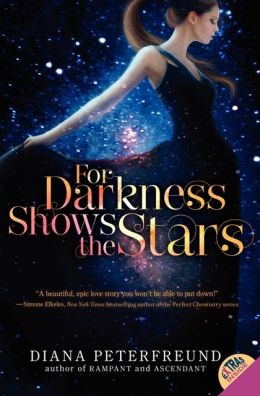
⃰ For Darkness Shows the Stars –Diana Peterfreund
I went to a book signing for a wonderful YA author, Cynthia Hand, and in talking with her she recommended this book. I went home and downloaded it to my Nook, and I’m so glad I did! (By the way, read her series, Unearthly—great YA books about angels and set in East Idaho and Jackson Hole. Cool!)
This is another version of Persuasion, but set in a dystopian future England. Seeing as Persuasion is my favorite Austen book, how could I not like it? But this one really had some intriguing concepts that drew me in.

First, the whole setting of a future England that has rejected modern technology and genetic tampering was well thought out. I struggled at the beginning, trying to make sense of her terminology, but as I read on more background was explained and I was sympathetic to the plight of Elliot, the strong, determined heroine.
Then her childhood sweetheart, Kai, returns—with a group of technology-loving sailors. Kai, of course, rejects Elliot now in favor of another girl, and Elliot is forced to watch what seems to be a growing attraction between them. Yet she knows Kai a little too well—and knows that something is not quite right in these returning heroes.

I really enjoyed Peterfreund’s writing style. It was not overly heavy yet not sappy or weak, either. I thought the story was a beautiful retelling, with just enough twists to make it a new story, too. I especially liked the subplot with Ro, a “reduced servant” (someone whom the genetic crisis left in a lower intellectual state). She and Kai had befriended her in their youth, and now she is in need of their protection—and is instrumental in bringing them back together.

I would have to say this is my top Austenesque book that I read last year. I hope you’ll give it a try!

Mansfield Ranch—Jenni James
I was introduced to Jenni James when I read her first teen Austen book, Pride and Popularity. Then I actually met Jenni James (and talked to her several times—what an awesome lady!) at Salt Lake Comic Con in September. I’ve also read a few of her Faerie Tale collection. I went home and started following her on Wattpad.com and was eagerly reading each chapter of Mansfield Ranch as she posted it.

What I like about Jenni James is that she takes the essence of an Austen story, but not only brings it into a modern world, but teenager-izes it, too. I’m all for making Austen’s stories appealing to today’s young audiences, in hopes that they’ll go read the originals as well.

In Mansfield Ranch, the sweet and spunky Lilly Price is struggling with her foster family and her relationship with them. She loves her horse and her older “brother,” Sean. But when she realizes what she feels for Sean is more romantic—and he feels that way, too—it’s just awkward. More awkward is when some rich, stuck up guy, Harrison, moves next door and torments Lilly, seeing as she’s the only girl who seems immune to his charms. Sean is dating Harrison’s sister… Lilly’s foster sister is dating Harrison… it’s a messy, messy triangle. When Lilly is with Sean, you can really feel the tension, sense the romantic undercurrent. She writes some good kissing scenes!

I admit, I wondered where Jenni James was taking this story. How would she resolve it happily? (In Jane Austen’s time, marrying your cousin was quite okay for Fanny Price… in our day, marrying your foster brother still might be too weird.) But when Lilly is asked to come back and live with her biological Grandma, the distance between the two makes the relationship feel more… normal. And Harrison turns out to be a jerk. Good riddance!

There were some parts of Austen’s original that I missed, but all in all, it’s a good Mansfield Park alternative that is a quick and romantic read.

A Darcy Christmas—Amanda Grange, Carolyn Eberhardt, Sharon Lathan
I read this because I could download it for free. It contains three short pieces of fiction, all about Austen’s original characters in a Christmas setting. The first two were great—quick, fun, full of Darcy and Lizzie and “what if” Christmas scenarios—one was a Christmas Carol with Darcy as Scrooge! The third portion, however, I quit reading. Sharon Lathan gets way too involved with bedroom scenes. So if you want a fun Austen Christmas book, I can recommend two-thirds of this one. J

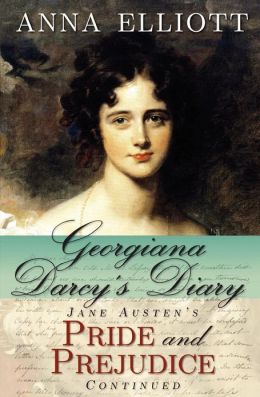
Georgiana Darcy’s Diary—Anna Elliot
With a name like Anna Elliot, how can you NOT be an Austenesque writer? I enjoyed this book a great deal. It was written with language and mannerisms that are true to Austen’s originals. It depicts Georgiana Darcy just coming of age, being trailed by suitors—but her heart was taken years ago, by none other than her cousin and co-guardian, Colonel Fitzwilliam. True, there’s about 15 years of age difference, but she’s been praying for his safety while he’s away fighting old Nappy, and he’s been dreaming of her while on the battlefield. It’s a sweet romance and it ends beautifully—and there’s a sequel I haven’t got around to, yet.


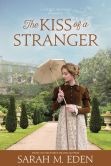
The Kiss of a Stranger—Sarah M. Eden
This falls under the Regency romance heading, so it’s not technically Austen fan fiction—but it’s set in the same era and has the same societal structure that I love reading about.

I read this in a day and a half, so it’s a quick read. It was lent to me by a friend, and I can’t remember the main characters’ names… sorry! But in a nutshell: A young woman, berated and much abused by a greedy uncle, is accosted and kissed by a kind, rich stranger. Well, kissing in those days means marriage, so the greedy uncle forces the marriage to occur. Now the rich, young man has a wife and while debating whether to get it annulled, well, she’s so charming and perfectly suited to him, they fall in love.

The one thing I disliked about this book is that the main characters are so obviously falling for each other, but will either of them say something? Will they even just hint at, “I might be falling for you?” No. But there are a few tender conversations and even more tender embraces that should make them stop and say, hey, I think he/she loves me. But then some ill-phrased comment or misconstrued glance separates them for weeks.
Aside from the frustration of dragging out the will-he-won’t-he tension behind the annulment decision, this was a romance I just devoured. I went on to read two more of her Regency books, Seeking Persephone and An Unlikely Match. I read them both in two days. This author really likes throwing her main characters into impossible love matches, so it’s all very frustrating romantic tension. But for a quick, romantic read, go ahead and indulge.

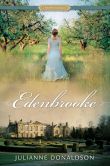
Edenbrooke—Julianne Donaldson
I got this book for Christmas, and I read it in the couple of days following the holiday. Then I read her next book, Blackmoore. These are books I’ve been wanting to read ever since I’d seen them adverstised, so I anxiously devoured them (as I do most books).

Anyway, Edenbrooke did not disappoint. My very, very favorite part is when the heroine, Marianne, is sitting in an inn, having just carried her shot-up, bleeding carriage driver away from the scene of a highway robbery, and she’s being bothered by a not-so-gentlemanly gentleman. So she pretends to be a dairymaid, and sings this song: “Big cows, lumps of meat, give me milk, warm and sweet!” I laughed so hard at that! Because I know that cows are rather frustrating “lumps of meat” and that little ditty is just genius.

Overall, this story had some hilarious moments, some romantic tension, and a lot of a beautiful manor and a gorgeous gentleman. Plus some really odd but page-turning twists. I think it’s an excellent Regency story, especially since this is her first novel.

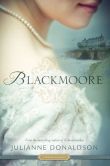
*Blackmoore—Julianne Donaldson
Having said that about Edenbrooke, I must say this: Blackmoore is three times better. The book has beautiful allegories woven throughout it, comparing our loving lady to a bird trapped in a cage. The birds and birdsongs of England are described throughout the book. The setting of a windy, rainy moor abutting the sea makes a much more somber mood. And it should be—because instead of giggling like I did during scenes in Edenbrooke, I cried for the last third of this book. It was a heart-wrenching situation where two people who love each other can’t declare it—their families would throw them apart if they did. And in the end, they are apart, anyway. (Don’t worry, it does end well.)

I felt this was a triumphant follow up, and the author really found her strengths in storytelling. It was a different style of story, with many flashbacks used to unfold the reasons behind our leading lady’s refusal to accept her feelings for her guy—or any guy, for that matter. But as the story eventually fell into place, you could really feel how appropriate the bird-in-cage analogy was. I loved it.

One final review:
Wuthering Heights, Emily Bronte

Yes, I read the original Wuthering Heights. It’s not Austenesque but written in the same era. And it was sad. The poor, tortured people who had to live with mean old Heathcliff and his bad temper—I feel for them. To not ever have love turn out like it should, whether love in a family or love between spouses, makes a truly disheartening world.

(Edit: After I first posted this, I remembered two other books I read last year.)
Midnight in Austenland-Shannon Hale -- Good, but not as good as Austenland. And the movie Austenland was great! I'm buying it when it comes out on dvd Feb. 11.
Persuasion-Rebecca H. Jamison -- It's very similar to the book I wrote myself.... and my jealousy that she got published and I didn't prevents me from saying any more. 

Sunday, October 13, 2013

Being Broken

Being Broken

A sculptor traveled to Japan to take part in various art exhibitions. He had brought several hand-made clay cups as gifts for his host. As he began to unpack, he found that the baggage handling process had broken four of the cups. Without another thought, he put them in the trash can in his room.

At the end of his stay, his host presented him with a going-away present: the same four cups, now reassembled and mended with silver. His host said, "Now, even better than when you brought them!"

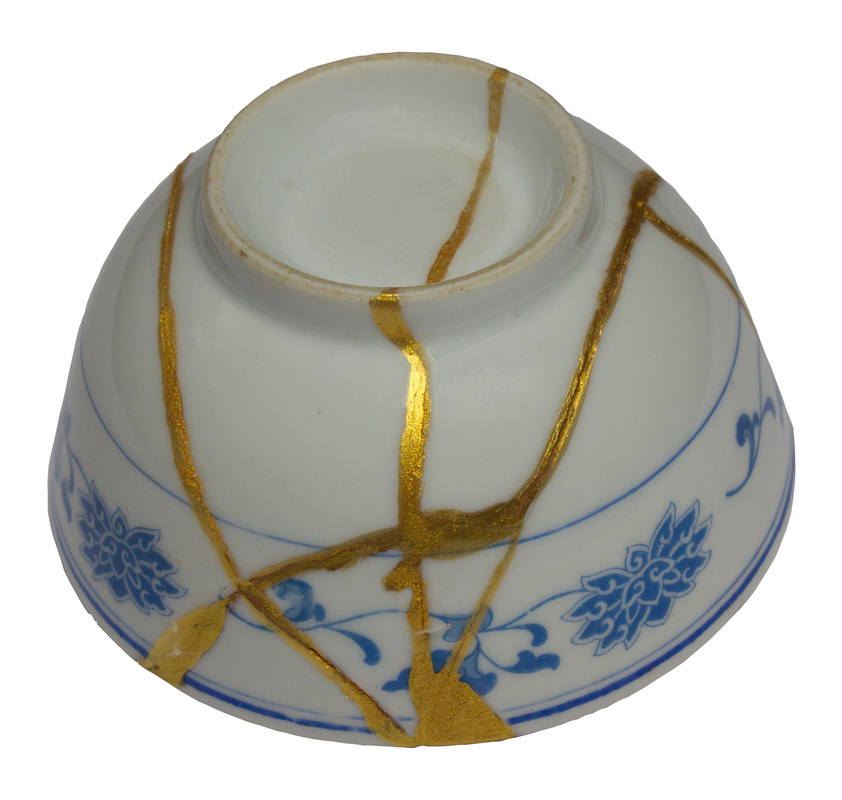
The artist learned of the Japanese art of Kintsugi, meaning to artfully rejoin something damaged, or Kintsukuroi, golden repair. To the Japanese, repairing something that has a history and has suffered damage makes it even more beautiful. They draw attention to the cracks with a resin that is colored gold, or may even contain real gold. They "cherish the imperfection of a broken pot repaired in this way….seeing it as a creative addition and/or re-birth to the pot’s life story."  (See original story at this blog).


To reclaim and reassemble these broken pottery pieces is probably not easy. So many cultures would see the broken pieces simply as garbage--once shattered, there is no value left. But through Kintsugi the original piece is not just put back together, but enhanced, embellished, and given more worth than it originally had. Some Japanese stories tell of collectors purposely breaking their valuable pottery just so it could be repaired in this way!

In a trendy twist, many artists are taking broken china and "upcycling" it for a mosaic. This artist shows how she took a dish of her mother's that she had accidentally broken, and combined it with other broken pieces to make a new piece of art (and to preserve the look and sentiment attached to the original dish).


Why am I talking about broken dishes? The idea came to me as my husband and I discussed several events from our lives over the past years. We were on a long 3-hour drive, so we had a lot of time to remember the good, bad and ugly. :) We talked about how certain events, relationships, and resulting spiritual crises had left us feeling "broken." He had read about Kintsugi before, and likened himself to the broken pottery. I compared it to the mosaic from a broken dish. Together, we discussed how the healing process of putting our lives back together was actually quite painful. It was slow. It was hard to see any beauty during the formation of healing bonds. But in the end, we could see that, like in Kintsugi or mosaics, the beauty of our lives was actually enhanced by the process of "being broken," then being put back together by The Healer, Jesus Christ.

Do you ever feel like a broken vessel? Maybe the weightier matters of life have left stress fractures. Maybe the load of procrastinated repentance is cracking the surface. Maybe storms completely outside of your control have nonetheless crushed you beyond your ability to endure. And maybe, you just feel broken.

But broken does not mean lost. Broken does not mean garbage. Broken does not mean irreparable.

Broken means ready to become new again.

When we feel like a broken vessel, we can know that we are in the hands of the Divine Potter. Isaiah 64:8 says, "O Lord, thou art our father; we are the clay, and thou our potter; and we all are the work of thy hand." This scripture tells me that there is a master plan for our lives, and the Divine Potter sees the best form we can become. We are promised: "Behold, as the clay is in the potter's hand, so are ye in mine hand, O house of Israel" (Jeremiah 18:6).

But, if we have already been hardened, formed, fired into a certain shape--and that shape is not the final form we were meant to be--how else can we be reformed? The clay will not return to its soft, malleable state. The clay will have to be broken. "Thou shalt dash them in pieces like a potter's vessel" (Psalm 2:9).
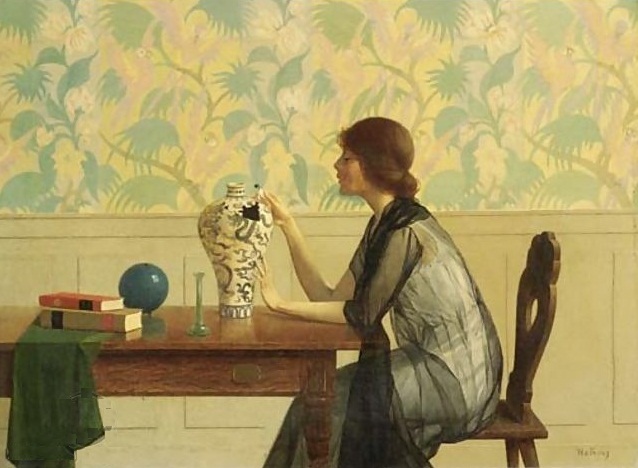
The Broken Vase, by Harry Watrous

The thing about being broken is we all ask, why? Why break me? What was wrong with how I was before? Sure, I might have had a few flaws. Maybe I was looking tarnished. But was it so bad?

Remember this: Broken is the sacrifice that has been asked of us. When the Savior spoke to the Nephites just prior to his appearance, he said, "Ye shall offer for a sacrifice unto me a broken heart and a contrite spirit." Moroni 6:2 reads, "Neither did they receive any unto baptism save they came forth with a broken heart and a contrite spirit, and witnessed unto the church that they truly repented of all their sins."

We can rationalize that our few flaws or tarnished spots are not grievous sins. We'll change those, eventually. But our Divine Potter may know that now, sooner than we thought we were ready, we need to sacrifice those things and give him a broken heart.

President Ezra Taft Benson called it godly sorrow. It is "a deep realization that our actions have offended our Father and our God. It is the sharp and keen awareness that our behavior caused the Savior, He who knew no sin, even the greatest of all, to endure agony and suffering. Our sins caused Him to bleed at every pore. This very real mental and spiritual anguish is what the scriptures refer to as having 'a broken heart and a contrite spirit.' Such a spirit is the absolute prerequisite for true repentance" (Ensign, Oct. 1989, p. 4).

I know that in my life some of those times when I felt most broken through betrayal, pain, loneliness, and deprivation, I felt real "mental and spiritual anguish." And even then, I didn't always look for healing from the source that could heal. I was still stubborn, independent--wounded, but not willing to soften and give in, ask for help and be willing to change.

To be truly brokenhearted requires the second element of our sacrifice: contrition. Elder Bruce D. Porter said, "The sacrifice so entailed is a sacrifice of pride in all its forms. Like malleable clay in the hands of a skilled potter, the brokenhearted can be molded and shaped in the hands of the Master. ... Those who have a broken heart and a contrite spirit are willing to do anything and everything that God asks of them, without resistance or resentment. We cease doing things our way and learn to do them God's way instead" (Ensign, Nov. 2007, p. 32).

That's the hard part. Resistance and resentment are the stubborn burrs that attach to us when we are going through trials. It is the hardest trait to rid ourselves of--yet being broken will be futile until we quit resisting, quit resenting, and allow a reformation or a "re-formation" into the pattern the Lord would like to see in us.

For, "As we make the sacrifice to Him of all that we have and all that we are, the Lord will fill our hearts with peace. He will 'bind up the brokenhearted' (Isaiah 61:1) and grace our lives with the love of God." (Bruce D. Porter, ibid.).

I am still in the process of "reforming." I am still learning to be contrite and quit asking, "Why?" I am learning gratitude for the changes. I am just beginning to see a glimmer of the gold veins that fill the cracks in the vessel, making what was broken actually more beautiful. With patience I may yet learn to fully offer my broken heart to Him, the Master Potter, who can do so much more with it than I.

Tuesday, March 26, 2013

Almost Homemade Ravioli Soup

I don't claim to have much culinary genius, but I do enjoy making a meal that tastes good yet costs little. Sometimes my creations turn out good, sometimes not so good. Tonight I think I came up with a good one.

It was soup night (mostly because 50% of my family is sick) and I wanted a soup that was quick and tasty. I took a poll of the kids and Italian soup won. I had a recipe for a tortellini soup, but decided to adapt it to what I had on hand. Here is my final creation. It had a lovely, thick tomato base and a homemade touch thanks to the sauteed veggies.

Yummy soup, full of good tomato sauce and ravioli. 

Almost Homemade Ravioli Soup

2 T. butter
1/2 c. onion, chopped
3 ribs celery, chopped
1 T. crushed garlic
2 carrots, grated
1 can tomato sauce
2 c. water
1 can red kidney beans
1 can Chef Boyardee Beef Ravioli
Oregano, Italian seasoning, salt and pepper, to taste

Melt butter in skillet. Saute onion, celery, garlic and carrot until softened. Meanwhile, combine tomato sauce, water and kidney beans in a saucepan. Heat to boiling. Add vegetables and mix well. Reduce to a simmer; add can of ravioli with the sauce. Season to taste. Cook until pasta is heated through. Serves 4-6.

Notes: I love the aromatic smell of sauteed onion and celery, and I think taking the time to cook them and add them to the soup gives it the homemade flavor that's well worth the effort. However, if you didn't want to take the time to do this, you could add dried chopped onion and some frozen mixed veggies to the tomato/water mix instead.

I added the kidney beans to boost the protein in the soup and still keep it an almost-meatless main dish. It's a healthy and inexpensive way to "beef up" the soup!

Approximate cost: $2.75 (one can ravioli, $.88 on sale, one can kidney beans, $.88, one can tomato sauce, $.25, onion and other veggies and spices, approx. $.75.)

I served the soup with cheese sandwiches: wheat bread slices, cheddar cheese, grilled under the oven broiler for 2 minutes or less. My kids love them and they are so easy. Growing up, our family would eat cheese sandwiches almost every Sunday night for a quick dinner after our big Sunday after-church feast.

Another way to round-out the meal is to make homemade biscuits. Cut the biscuits extra-thick and serve hot with butter--nothing could be more delicious and still inexpensive!
A batch of homemade biscuits takes about 20 minutes to mix and bake. 

If you try out this recipe, leave a comment and let me know how your family likes it!


Saturday, January 19, 2013

Insanity

It's 10:47 on a Saturday morning. I'm still in my pajamas. I did have a healthy breakfast of just hot chocolate... because there were no clean bowls from which to eat my cereal. My big plans for today include folding that basket of laundry that has been sitting there since last Saturday, and maybe getting dressed.

That's when I think, "This is insanity."

This thought has plagued me several times since the beginning of the year when it was time to make New Year's resolutions, and I didn't make any. I thought about making some, but couldn't settle on how, exactly, I wanted to change my life.

Insanity.

This one word keeps coming to mind--as defined by Einstein (or not... see an interesting discussion of this quote at Psychology Today... http://www.psychologytoday.com/blog/in-therapy/200907/the-definition-insanity-is). "Insanity is doing the same thing over and over and expecting different results."

So if I want my home to be clean and to have a bowl ready to eat my cereal in the morning, I have to do something different. Like not leave the dishes piled in the sink at night.

If I want to feel like my Saturday has a purpose, I need to treat this day differently from last Saturday.

My real goal in life, one I've had since at least fifth grade, is to become a published author. I tried--I wrote a book and sent it out for publication--and was not successful. But I do want to succeed, to try again. I want different results this time.

I read a blog from another author today which reminded me of my deep internal desire to be among the published authors of the world. She's going on tour for her new book in a week, and wrote about her dedication to her genre and the number of other authors she has researched and read in the past year. She's doing it! She's living her dream! And I am so jealous. I want to be that person.

And what's stopping me? Only my own insanity of thinking it'll happen someday... and then waiting. I know I need to put in the effort to make it happen. To make it a living, breathing, demanding part of my life... like a fifth child. Ugh... that sounds like so much work! And that's when I stop.

I dream a lot, but work so little. Somehow this equation needs to balance better.

I admire my husband, who is going back to college now. It's super hard! College is so much more demanding than I remember it being when I was 20. He is only a couple of weeks into the semester but he's a changed person--a better person, I think. So admirable. So NOT insane. :)

So I think I'll take a few minutes today to do something different. Maybe I'll start with getting dressed. And loading the dishwasher. And I can tell myself I did some writing today. And I can rethink what goals I have for the rest of the new year... and then actually make some goals and write them down and put them in front of my face each day... and then actually get up and do them.

Maybe I won't be so insane after all.

Friday, November 9, 2012

My first memory

In my earliest memory I am sitting on the floor, surrounded by the disemboweled packages of Christmas morning. This would be Christmas day, 1979, and I have just turned three.

If I tune in the picture like a fuzzy old TV set, I see myself sitting on the floor in a narrow hallway. I see dark wood paneling on the walls. I don't remember the flooring--perhaps orange or brown carpet as was common in the 70s. Or maybe it was a wood or linoleum floor. I know this passageway is just a few feet long, leads from the living room into the dining area, and to the back of the house where the kitchen lies. I don't know where my older sister, Rachael, is, or my baby sister Marian. Probably playing or sleeping. I know that Christmas excitement has just ended, and it's time to start cleaning up.

My "big" Christmas gift was a tea set--plastic cups and saucers, tea pots and spoons, in green and yellow and pink. It's a beautiful thing--my own dishes to play with! I found the tea set inside a green and white checked drawstring bag. And when it was time to clean up, my Mom scolded me. The drawstring bag was not just wrappings to be thrown away--she made that bag so I could have a safe place to keep my new tea set. I wasn't supposed to dump out all those dishes onto the floor.

I think it's the combination of the excitement of the day and the stress of the scolding that has burned this memory into my mind. I remember nothing else of Christmas when I was three. A lot of my memory of the house comes from pictures I looked back on later. Our tradition was to go to Grandma and Grandpa Johnson's house, just a few hundred yards down the road, later in the morning for breakfast and more presents and then dinner and day-long playing with cousins while the adults talked (adults always talked so much! and about boring things!). So I know we were probably cleaning up at our house to prepare to go to Grandma's.

There's a fuzzy picture somewhere--so blurry you can hardly distinguish the subject--of my sister and I sitting on Grandma's orange upholstered rocker/recliner, grinning for our dad behind the camera. Even though the shot turned out fuzzy, I'm glad that he forever captured the impressions of the day--two happy, blond girls, the pride of their parents, on the happiest day of the year, surrounded by family in a house full of love. It's the essence of Christmas that comes through on that piece of photo paper--a little bit like my first memory. Not clear or distinct, but a hint of what joy, what bliss, can be found in the simple treasures of Christmas morning.

Tuesday, November 6, 2012

A bicycle story

This is a true story from my childhood.

I grew up in the country where there were no sidewalks. Without sidewalks, we seldom had any use for roller skates, skateboards, and even bicycles. Bikes in these days had banana seats and skinny tires--not the hefty "huffy" style bikes that could go off road. I remember when they did start making "10 speeds" and "mountain bikes," and we all really wanted one. But they were a hundred dollars (and this is back when a hundred dollars was like 300 dollars today). So we went without bikes for the most part. My mom had an old Schwinn bike from her college days, but it always had flat tires. The only other wheeled device I remember was a tricycle when I was very young.

When I was about nine years old, I went to visit my cousin, Erica, in Wyoming. I stayed with her family for a week. When she learned that I couldn't ride a bike, she was appalled. She took it upon herself to teach me to ride. We used her bike and her brother's, and she patiently pushed me up and down her long, rutted, dirt/gravel driveway until I finally got the hang of riding a bike. Then we rode around her neighborhood and town. I enjoyed this new-found freedom of getting somewhere quickly.

When I got home, I had a bug in me. I wanted a bike. I really wanted to be able to keep up this skill of riding a bike, and I now knew that I didn't need sidewalks (my cousin had no sidewalks in her neighborhood... dirt paths worked just fine). I asked my parents if I could have a bike, and they said no... maybe... we'll see.

I don't remember how or when, but I eventually got a bike. It was bought used, and assembled from pieces and parts of older bikes, but it worked and it was fun to ride around the farm and down the lane and up to the canal. The only place I didn't like riding it was along the street--our street was a highway with a speed limit of 50 mph, so I felt like the cars would almost blow me over when they drove past. I'd ride as far from the asphalt as I could without getting into the weeds and thistles and ruining my bike's tires.

It was late fall, almost winter, a year or so later. I was almost 11. I had been riding my bike on a Sunday as I went to do my chores, and when it was time for dinner, I had simply dropped it in the driveway and started walking around the house to go in the back door. I didn't know that my mom would be leaving soon for a meeting at church--I assumed that no one would be going out again on a Sunday evening. I was wrong. I heard the car start, and I ran back around the house--too late. My mom ran right over the center of my bike. She immediately pulled the car forward again when she heard the crunch, hopped out of the car and came running to see what the problem was. I was devastated, but she was mad. Hopping mad. She yelled at me for leaving the bike behind the car, yelled that she was late and couldn't worry about bikes now, and yelled at me to move the bike out of the way so she could leave. I dragged it to the side of the driveway, and she zoomed out of the garage and headed to the church.

Now I was mad. I felt all the injustice of being robbed of my only bike. I felt like a victim of circumstance. I had no bike, and I had no apology, and I didn't take time to think about what I was doing.

I had many times driven by a house, about a mile and a half down the highway from our farm. The people in this house had a hobby of fixing up old bikes and selling them. I knew I'd seen some bikes lined up out in front of the house the last time we'd driven past. I determined that I would take all the money I had saved (somewhere close to $20), walk down to that house (despite the fact that it was Sunday), and buy myself a new bike and ride it home.

I immediately went to my bedroom, still wearing my chores clothes and boots. I took my money and shoved it in my pocket. Then I started walking down the highway to the bike seller's house.

You can imagine me walking, in the dimming twilight of a cold, windy fall evening. I walked quickly at first, energized by my anger and inspired by the vision of how my mom would be sorry that I had to spend all my money to buy myself a new bike. I walked and walked--walked past the church where my mom was at her meeting. Walked past the house of everyone I knew, and came to the farther end of the road where I didn't know anyone who lived around there. I walked with my socks falling down and my rubber chore boots chafing against my heels. I walked with  my chore coat open (all the old, hand-me-down coats with broken zippers ended up as chore coats), the wind blowing and chilling me to the core. I walked in my chore pants, which had been my scarecrow Halloween costume the year before. They were turquoise corduroy pants, four inches too short in the leg, with red and yellow patches sewn up and down the legs. I walked until I finally stood in front of the bike peddler.

And then I was crushed. In my hand, inside my pocket, I gripped my nearly twenty dollars. And I stared at the price tags attached to each bike. The small ones, ones that would fit my 4-year-old brother, were $20. Bikes my size cost $30, $40, or $50. I had nowhere near enough money. My anger melted into sheer disappointment. I was crushed. I might as well give up ever having a bike.

And to top it all off, I had to walk a mile and a half back home.

Turning back to the north, with tears running down my face, I realized I had done something pretty stupid. I hadn't told anyone where I was going. I didn't know anyone around here. I had no one I could ask for help and didn't dare ask a stranger to use their phone--and besides, my mom had the car at her meeting at the church. I was stuck walking home in the near-dark. To top it all off, I really had to go to the bathroom! Downcast and discouraged, I trudged along the gravel shoulder of the road, forlorn and alone in my ragged old clothes and rubber chore boots.

I must have been a sight, because not long afterwards I heard a cry from a passing car. The car quickly pulled off the road and parked just ahead of me. A young lady rolled down her window and stuck out her head.

 "Do you need help?" she called.

"No, I'm OK."

"Are you sure? Do you have ... someplace to live?"

I realized then that I made the perfect picture of a street urchin... patches on my clothes... dirty, tear-streaked face... walking alone on a dark, cold night.

"Yes," I replied. "I just live down this street." I could tell she didn't believe me.

"Well, can we give you a ride?"

"No," I replied because, after all, they were strangers.

The lady's husband leaned over. "Are you sure? We can take you home."

I hesitated. I knew I shouldn't get in a car with a stranger. But I felt my bladder was going to burst if I didn't get to a bathroom soon. Was it better to knock on a stranger's door and ask to use their bathroom, or get a ride from a stranger and use your own bathroom at home? I pondered briefly.

"I... I guess I'll take a ride."

"Oh, good. We were so worried. Where do you live?" the lady asked as she got out of the car so she could lean the seat forward and let me in the back seat.

"It's only about a mile away. Straight down this road."

I know they asked other questions while I rode that brief time with them... but the only thing on my mind was crossing my legs and hoping I could get to the bathroom on time. I finally directed them to pull over in front of my house. They slowed, stopped, and let me out (thankfully I wasn't going to be kidnapped). I said thank you, and they expressed their concern that I was really OK... I'm sure they thought I'd escaped from the orphanage and was just pretending this is where I lived. So I dashed up the hill to our front door and went right in the house, if only to prove I did live there... and to make it quickly to the bathroom.

I never replaced my run-over bike--in fact, I never owned a bike again until I was an adult. But I did learn to never leave your bike in the driveway.